AI Photo Editor - AIFoto
- 4.6
- Rating
- 10.00M
- Installs
- Free
- Price

 Analysis by App-foxy
I approached AI Photo Editor - AIFoto as the kind of photography app I would suggest to someone who wants noticeable changes without learning a complicated desktop editor. Its focus is personal pictures: improving a face, adjusting the body, applying an AI-style filter, or arranging several images for a social post. That makes it more specific than a basic brightness-and-crop tool, but less intimidating than a full professional editor.
My first impression is that it is built around quick decisions. You choose a photo, try a visual treatment, and judge the result immediately. That sounds simple, but it matters when you are editing a picture for a profile image, an Instagram Story, a birthday collage, or a casual post and do not want to spend half an hour adjusting individual sliders.
The app is free to install and is suitable for Everyone. Daily Joy Studio is the developer, and the app sits in the Photography category. It has reached more than five million installs and holds a 4.7 average from roughly thirty-one thousand ratings, which suggests that its straightforward editing approach has found a substantial audience.
You May Also Like

 Google Keep - Notes and lists
Google Keep’s Quiet Growth Shows the Appeal of Simpler Notes
As mobile work gets busier, Google Keep keeps winning a simple contest: capture a thought quickly, find it later, and get on with the day.

 Blood Strike: 2.5 Anniversary
Blood Strike’s Loadouts Turn Every Drop Into a Tactical Gamble
A close look at Blood Strike’s custom loadouts: how fast access to signature weapons reshapes its battle royale rhythm, rewards preparation, and narrows the gap between fights.

 Pandora - Music & Podcasts
Pandora’s Music Is Easy to Start, but Harder to Recover
Pandora’s strength is its low-effort path from a seed to a station. Its weak spot is how much confidence it asks you to place in connection, setup, and quiet recovery.

 8 Ball Pool
 Is Built on Rivalries, Rematches, and Routine
A close look at the rivalries, rematches, shared routines, and unanswered safety questions that turn a quick pool match into a persistent mobile community.

 Samsung Music
’s Quiet Strength Is Playing What You Already Own
Its reach comes less from spectacle than from dependable access to a personal library. That simplicity is both the app’s strongest retention engine and its ceiling.

 AccuWeather: Weather Radar
AccuWeather Review: A Quick, Clear Forecast for Everyday Decisions
For everyday plans, the best forecast is the one you can understand quickly. AccuWeather makes rain timing, radar, and local conditions easy to act on, with a few trade-offs.
More From Our News Desk



What to expect before editing your first photo
The name points toward artificial-intelligence editing, but I would not treat it as a replacement for every kind of photo software. Its strongest appeal is convenience. Instead of building an edit from scratch, I can start with an existing picture and use the app’s specialized tools to make a portrait feel cleaner, more polished, or more suitable for sharing.
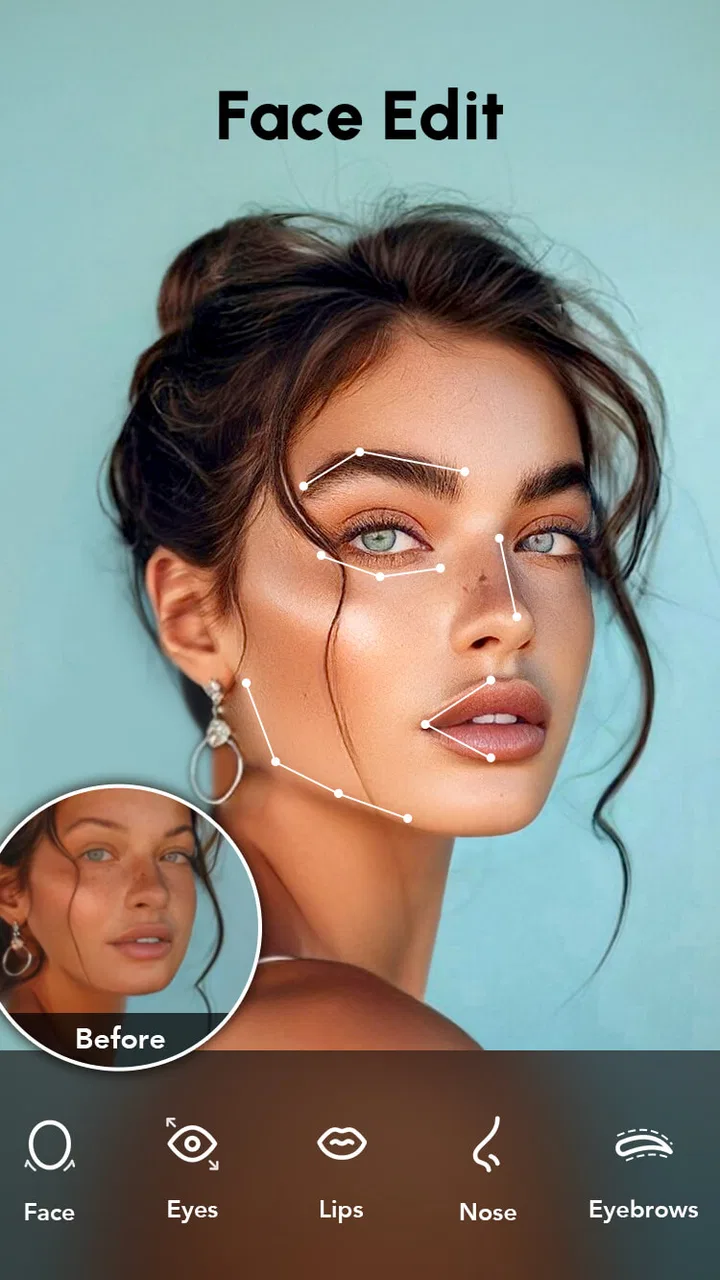
The main areas are easy to understand: body and face editing, AI photo enhancement, filters, and collage creation. These are useful together because a single social image often needs more than one step. I might improve the overall appearance first, make a restrained face adjustment, and then place the result into a vertical collage for a Story. The value is in keeping that workflow in one app rather than moving between several separate tools.
That convenience also creates the app’s main limitation. A fast editor can encourage me to accept the first dramatic result instead of checking whether the image still looks natural. Face and body adjustments are especially sensitive. A small change can help a portrait look balanced, while a heavy effect can make the proportions or skin texture look artificial. I recommend treating the strongest options as starting points, not automatic final settings.
The app is a good match for people who edit selfies, outfit photos, travel portraits, and social-media images. It is also approachable for someone who has never used a serious photo editor. On the other hand, I would choose a more traditional editor for detailed color correction, precise masking, RAW work, or a carefully controlled professional retouch. AIFoto is about accessible results, not a complete studio workflow.
It is also worth understanding the payment model before getting attached to every tool. The app is free, while in-app purchases range from $2.99 to $39.99 per item. That does not make the free experience useless, but it means I would try the workflow with ordinary pictures first and only consider spending money after deciding that the available editing style fits my needs.
How I would prepare a photo
For a first attempt, I would choose a well-lit portrait with one clear subject and a reasonably simple background. This is not because every other image is unusable, but because a clean starting photo makes it easier to judge what the editor is actually changing. If the face is partly hidden, the subject is very small, or the picture is already blurry, an AI enhancement may have less useful information to work with.
I would also keep the original image untouched. My practical habit with any one-tap editor is to duplicate the source or work from a copy. That gives me freedom to compare the edited version with the original instead of gradually forgetting what was changed. It is particularly helpful with portrait tools, where a result can look impressive at first and overly smooth after a second look.
Another useful preparation step is deciding where the image will be used. A profile picture, a full-screen Story, and a collage have different framing needs. If I know the destination first, I can avoid making a beautiful edit that later requires awkward cropping. AIFoto’s collage and social-oriented direction makes this planning more valuable than it might be in a simple gallery editor.
Getting through setup without overthinking it
After installing the app, I would begin with a single photo rather than importing a large collection. That keeps the first session focused and makes it easier to learn which controls are free to use, which effects require an in-app purchase, and how the app presents the final image. The current version is 1.22.2 and it supports Android 8.0 or later, so compatibility is broad for many Android users.
I would not start by trying every filter. The better first setup is to select one portrait, look for the enhancement or face-editing path, and make one modest change. This gives a meaningful result quickly. Once I understand the basic interaction, I can explore body adjustments, decorative looks, and collage layouts without confusing a setup problem with an editing problem.
When an app offers several AI-driven effects, the most important early question is not “Which one looks the most dramatic?” but “Which one preserves the reason I like this photo?” If the picture is meant to show a person’s expression, I would favor an adjustment that keeps the eyes, smile, and face shape believable. If the purpose is a playful social post, I might accept a stronger filter, but I would still compare it with the untreated image before saving.
The first setup is also a good time to decide whether the app suits your editing habits. If you prefer manual control over exposure, highlights, shadows, color temperature, and fine detail, an AI-first interface may feel restrictive. If you prefer a guided result and want to spend your time choosing the picture rather than tuning every parameter, the same design can feel refreshingly direct.
The first successful action I recommend
My suggested first win is a before-and-after portrait enhancement. Choose a photo with a visible face, apply a light improvement, and inspect the result at both the full image and close-up view. The purpose is not to create a completely different person. It is to see whether the app can make the image feel clearer or more presentable while leaving the identity and expression intact.
Once that looks acceptable, I would try one face adjustment rather than stacking several. This is a useful test because it reveals how much control the app gives me and how quickly the effect becomes noticeable. If the change is too strong, I would step back instead of compensating with another filter. Layering effects can make it difficult to tell which tool caused an unwanted result.
After the portrait edit, I would make a small collage using the edited photo and one or two related images. This tests a different part of the app: whether it helps me turn an individual edit into something ready for sharing. A collage is also a realistic everyday outcome. I might use it for a weekend recap, a comparison of outfits, or a small collection of food and travel pictures.
One non-obvious advantage of this sequence is that it separates quality from decoration. First I judge the photo itself, then I judge the layout. If I start with a busy collage and a strong filter, I may overlook a face that has been softened too much or a crop that cuts off an important detail. Working in stages makes the app easier to control even when the controls are designed to be quick.
A realistic everyday workflow
Imagine I have taken a quick portrait before meeting friends. The lighting is acceptable, but the image looks flat and I want something suitable for a Story. I would select the photo, begin with enhancement, and make only a modest face adjustment if needed. Then I would preview an AI filter, keeping the one that adds a mood without hiding the original lighting.
Next, I might combine that image with a second photograph in a collage. At this point, the crop matters as much as the effect. I would check that the face is not pushed too close to an edge and that the layout does not make one image appear accidentally more important than the other. I would save only after checking the complete composition, not just the individual image.
This workflow shows where AIFoto is more convenient than using a general gallery editor followed by a separate collage maker. I can stay inside one photography app and move from personal retouching to presentation. The trade-off is that a dedicated collage app may offer more layout precision, while a manual editor may provide more dependable control over color and detail.
Where first-time users may get confused
The biggest source of confusion is the difference between improving a photo and changing its appearance. An enhancer sounds corrective, while a filter is intentionally stylistic, but the visual boundary can blur when both are applied to a portrait. I would always preview the image without the effect before deciding whether the result is genuinely better or simply more dramatic.
Face and body tools can also create unrealistic expectations. They are useful when I want a subtle presentation adjustment, but they should not be treated as a guarantee that every pose, angle, or outfit will transform cleanly. A sideways pose, overlapping limbs, or a complicated background can make any automated edit harder to judge. For the most believable result, I would use a clear original and keep changes restrained.
Another point worth watching is the difference between a saved edit and a preview. A thumbnail can look convincing at a glance, while the full image reveals softened hair, altered edges, or a crop that does not work for the intended platform. I make a habit of checking the whole frame and then zooming into the subject before I consider the edit finished.
People may also wonder whether the app is suitable for group photos. I would use it most confidently when one subject is the clear focus. For a group image, I would inspect every face after enhancement or filtering, because an effect that looks good on the main subject may affect other people differently. A collage can be a better choice when I want to preserve several original moments rather than force one treatment across everyone.
The payment structure is another practical consideration. Since the app is free but includes purchases from $2.99 to $39.99 per item, I would not assume that every attractive effect belongs to the free experience. I would first complete a useful edit with the tools available to me and then decide whether a paid option solves a recurring problem. Buying an effect simply because it looks impressive in a preview is less sensible than paying for a workflow I will actually repeat.
Small habits that improve the results
- Start with the least intense adjustment. It is easier to add character later than to recover a natural face after several strong effects have been combined.
- Judge the crop before the filter. A well-framed ordinary image usually feels more finished than a heavily filtered image with an awkward cut-off.
- Use related images in a collage. Similar lighting and subject matter make the layout look intentional and reduce the need for aggressive filters to make different pictures match.
- Compare the final image with the original. This catches changes to skin texture, facial proportions, and background edges that may be easy to miss while editing.
These habits are especially useful because AI editing can make a result feel finished very quickly. Speed is the app’s strength, but it can also reduce the pause in which I would normally notice an unnatural detail. A short comparison at the end gives me much more control without making the process slow.
How it compares with the usual alternatives
Compared with a standard phone gallery editor, AIFoto is more focused on portrait presentation and guided effects. A gallery editor is often better for quick rotation, cropping, exposure, and basic color changes. I would use the gallery first when the photo only needs a technical correction. I would open AIFoto when I want the image to feel more deliberately styled or when a face, body, or collage is central to the task.
Compared with a professional mobile editor, AIFoto is easier to approach but less suited to exact work. A serious editor may give me finer control over layers, masks, curves, selective color, and local corrections. That matters for product photography, client work, or images that need to match a particular visual standard. AIFoto is the better fit when I value a shorter path from photo to shareable result.
Compared with a standalone collage maker, its advantage is continuity. I can edit a portrait and then place it into a layout without exporting between apps. A dedicated collage tool may still win when I need many layout choices, detailed spacing control, or a very specific print arrangement. For casual social content, the integrated approach is more convenient; for design-heavy projects, I would look elsewhere.
Compared with a filter-only app, AIFoto offers a broader workflow because the focus is not limited to color moods. The face, body, enhancement, and collage elements give me more ways to use one photo. The compromise is that a specialist filter app may have a more distinctive visual identity, while AIFoto is trying to cover several practical editing jobs at once.
Who should use it and who should skip it
I would recommend it to a first-time editor who wants to improve portraits, experiment with AI filters, and create social-friendly collages without studying a complex interface. It is also a sensible choice for someone who often edits selfies or personal photos and likes trying several looks before choosing one.
I would be more cautious about recommending it to a photographer who needs repeatable, exact adjustments across a large set of images. I would also point experienced editors toward a manual tool if they care about preserving every detail, controlling each correction, or building a layered composition. The app’s speed is valuable, but speed is not the same as precision.
Privacy-conscious users should make their own decision based on the app’s current permission and data practices before importing especially sensitive images. In practical terms, I would begin with ordinary photos rather than confidential documents or pictures that I would not want to process through any editing service. That is a sensible habit for AI-based photography tools in general.
For families, the Everyone age rating makes the app broadly approachable, but younger users may still need guidance around purchases. Because paid items can become expensive at the upper end of the listed range, I would make sure the person using the app understands when an effect involves payment. The free starting point is useful for learning the workflow before making that decision.
My next-step advice after the first edit
After the first successful portrait, I would create a small personal routine: one enhancement, one restrained face or body adjustment when appropriate, and one final check of the crop. Then I would save the version that still looks like the original person. This keeps the app useful rather than turning every picture into the same heavily processed style.
I would also test the collage maker with photos from one event. This reveals whether the app fits your real habits better than a single demonstration image does. If you regularly make Story recaps or simple visual comparisons, the combined workflow may justify keeping AIFoto on your phone. If you only need occasional brightness corrections, the built-in gallery tools may be enough.
The app was released on September 11, 2023, and its current version is 1.22.2. Those details are useful when checking compatibility and deciding whether your device can run the available version, but the more important question is practical: do its portrait and collage tools produce the kind of result you would actually share?
My answer is yes, with moderation. AIFoto is at its best when I use it as a fast finishing tool, not as a button that automatically makes every photo perfect. It gives beginners a reassuring route from an ordinary portrait to a polished social image, while still leaving room to experiment with filters and layouts.
For me, the deciding strength is the connected workflow: enhance a personal photo, refine its presentation, and turn it into a collage without switching between several apps. The deciding weakness is the temptation to over-edit, combined with the need to pay attention to which effects are included or purchased. If you want quick, portrait-centered editing and are willing to review the result carefully, AI Photo Editor - AIFoto is a worthwhile free starting point. If you need professional precision or completely manual control, a more advanced alternative will serve you better.
FAQs for AI Photo Editor - AIFoto
01What features does AI Photo Editor - AIFoto offer?
AI Photo Editor - AIFoto is equipped with a wide range of features designed to enhance your photos effortlessly. It includes AI-powered tools for automatic retouching, background removal, and color correction. Additionally, it offers creative filters, overlays, and text options to personalize your images. These features make it a versatile tool for both casual and professional users.
02Is AI Photo Editor - AIFoto free to use?
AI Photo Editor - AIFoto offers a free version with basic features suitable for general photo editing needs. However, for access to advanced features like high-resolution exports, exclusive filters, and ad-free editing, a subscription or one-time purchase may be required. Pricing details are available within the app on both Android and iOS platforms.
03How user-friendly is AI Photo Editor - AIFoto for beginners?
AI Photo Editor - AIFoto is designed with user-friendliness in mind, making it accessible for beginners. The interface is intuitive, with easy-to-navigate menus and straightforward editing tools. Additionally, the app provides tutorials and tips to help new users make the most of its features, ensuring a smooth editing experience.
04Does AI Photo Editor - AIFoto support multiple file formats?
Yes, AI Photo Editor - AIFoto supports a variety of image file formats, including JPEG, PNG, and TIFF. This compatibility allows users to edit images from different sources without the need for conversion. High-resolution formats are also supported, ensuring quality is maintained throughout the editing process.
05Can I use AI Photo Editor - AIFoto offline?
AI Photo Editor - AIFoto requires an internet connection for initial download and updates. However, once installed, many features can be used offline. Some AI-powered tools may need an online connection to function optimally. It's advisable to check specific feature requirements within the app to ensure smooth operation.
Pros
- User-friendly interface for quick edits.
- Variety of filters enhances creativity.
- Real-time photo adjustments available.
- AI features improve photo quality.
- Supports high-resolution image exports.
Cons
- Occasional lag on older devices.
- Some features require in-app purchases.
- Limited free version functionalities.
- Ads can be intrusive at times.
- No offline editing mode available.

AI Photo Editor - AIFoto
Gallery